House rewiring
House rewiring in Westmere
Most Westmere houses are older than the appliances plugged into them. We rewire bungalows, state houses and renovated homes across the peninsula, a few circuits at a time or the whole house at once, and test and certify the work when it is done.
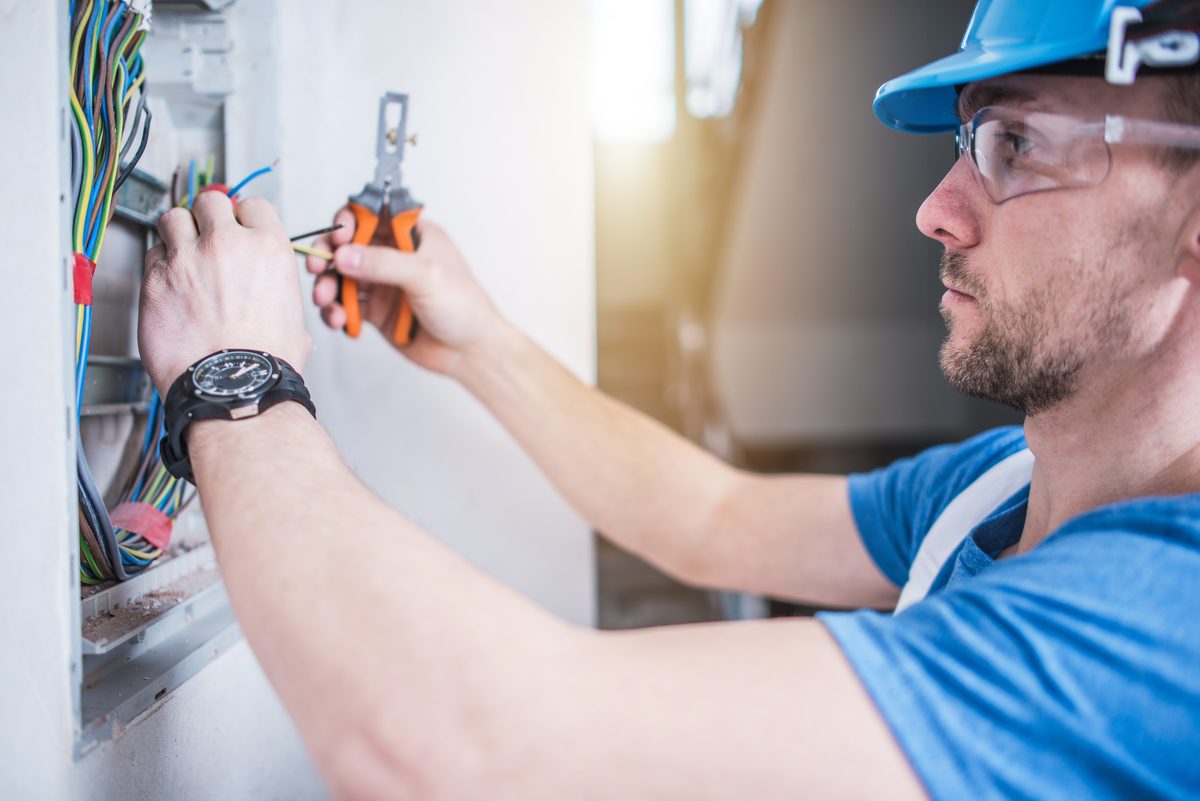
Wiring that has outlived its plan
Much of Westmere was subdivided over a few busy years in the 1920s. The Westmere Estate was launched in 1923, an extension took in Westmere Crescent, Oban Road and part of Lemington Road in 1925, and the Westmere Park Estate followed in 1926. The houses that went up were mostly Californian bungalows for workers and tradespeople, and the late 1930s added state houses to the mix. Whichever kind you live in, the original wiring was designed for a household with far fewer appliances than yours.
WorkSafe makes the same point about older homes in general: an installation ages, and it can become overloaded when the wiring was never designed for the number of appliances now in use. In a Westmere house that usually shows up as a patchwork. A kitchen extension from the 1970s, a bathroom redone in the 1990s and a sleepout added later may each have their own wiring, joined to circuits that are much older. Rewiring replaces that patchwork with one installation that is designed, protected and documented as a whole.
Signs your wiring is due for attention
WorkSafe lists warning signs that a home's installation may be becoming dangerous. Any one of them is worth a call; several together usually point to a rewire rather than a repair.
Hot or scorched plugs and sockets
A plug or socket that is warm to the touch, or has brown scorch marks around it, is a connection that is overheating.
Fuses blowing, breakers tripping
Protection that operates for no reason you can see is often responding to a fault or an overloaded circuit.
Lights that flicker
Flickering that is not the bulb can mean a loose or deteriorating connection somewhere on the circuit.
Multi-boards everywhere
Too few power points for the way you live leads to chains of extension leads, which is a wiring problem in disguise.
How a rewire runs
Look before planning
We open up the switchboard and check how the existing circuits run, what can be reached through the ceiling and under the floor, and which parts of the house have already been rewired.
Agree the scope
Some homes need the whole installation replaced; others need the oldest circuits done and the newer work kept. You decide with full information, including where extra power points, lighting and circuits for appliances such as a heat pump should go.
Replace and protect
New cabling, fittings and protection go in, usually with the switchboard upgraded at the same time so the new circuits have modern breakers and RCD protection.
Test and certify
Everything is tested before we finish, and you receive the certificate that applies. WorkSafe explains what you should receive when you get electrical work done, including a Certificate of Compliance for new fixed wiring. Where the law requires an inspection, we arrange a licensed electrical inspector.
Rewiring while you renovate
The cheapest moment to rewire is when the linings are already off. If you are opening up a kitchen, adding a bathroom or lifting floors in a bungalow, talk to us before the builder closes the walls. WorkSafe's advice for anyone renovating is to plan for the power points and fittings you need now and those you may want later, and that is far easier with the framing exposed.
A renovation is also the right time to rethink lighting. Replacing an old pendant-only layout with LED lighting planned for each room costs much less when the cables go in alongside the rest of the new wiring.
Rewiring questions
Can we stay in the house while it is rewired?
Usually, yes. The work can be planned so that some power is on at the end of each day, and the rooms done in a sensible order. Tell us what you need running, such as a fridge or a home office, and it is planned around.
We are buying an older house in Westmere. Should the wiring be checked?
WorkSafe recommends having a licensed electrician or inspector check the installation before you buy, and asking the vendor for the Certificates of Compliance for past work. A check before settlement tells you whether a rewire belongs in your budget.
What affects the cost of a rewire?
The size of the house, how many circuits and power points you want, how easily the ceiling and floor spaces can be reached, and whether the switchboard is replaced at the same time. We explain each of those once we have seen the house.
Is a partial rewire ever enough?
Sometimes. If part of the house was rewired properly by an earlier owner and it tests well, there is no reason to replace it. We tell you which circuits are worth keeping and which are not, so you only pay for what needs doing.
Do I need to keep the certificate?
Yes. Keep it with your house papers. WorkSafe notes that it may be needed for an insurance claim or when you sell the house, and it is the record of what was done behind the walls.
Talk to an electrician about your Westmere home
Call 021 156 4005 any time of the day or night, or send the details below and we will get back to you.
Other electrical work in Westmere
Switchboard upgrades
Old fuse boards replaced with modern circuit breakers and RCD protection, with the inspection arranged where the law requires one.Fault finding and repairs
Tracing tripping circuits, dead power points, flickering lights and hot sockets to the cause, then repairing it.24/7 emergency call-outs
An electrician on call 24 hours a day, 7 days a week for power loss, burning smells, storm damage and anything unsafe.Heat pump installation
Heat pumps installed by licensed electricians, with the circuit, isolation and outdoor unit planned around your house.LED and garden lighting
LED downlights, kitchen and living room lighting, and outdoor and garden lighting for Westmere homes.Oven and cooktop repairs
Electrical repairs to ovens, cooktops and waste disposals, from failed elements to tripping circuits.Enquiries
Contact us
Call 021 156 4005, or tell us what is happening and where, and we will get back to you.
021 156 4005- Auckland
- Call-outs 24 hours a day, 7 days a week